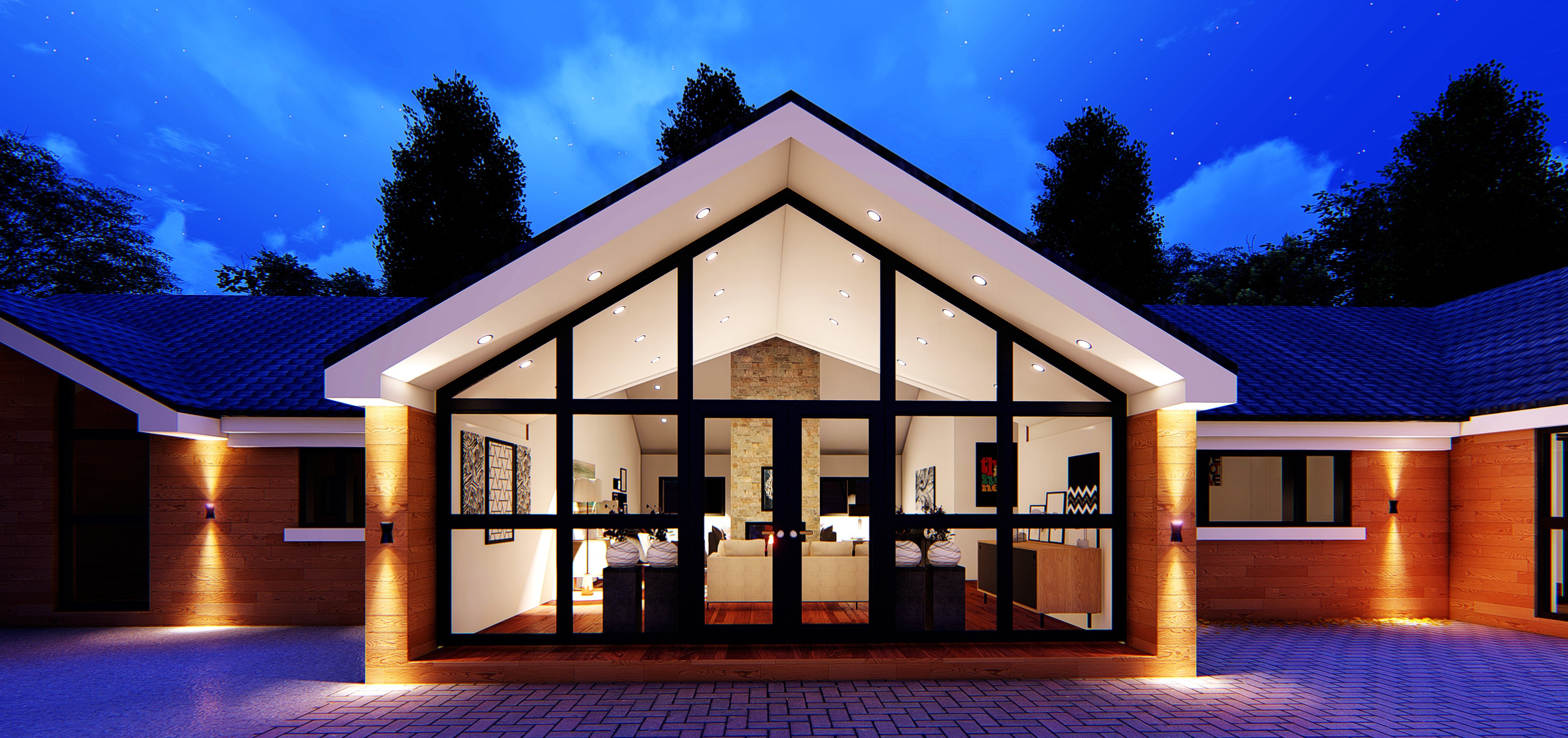
Across Greater Manchester, from the Edwardian terraces of Chorlton to the larger semis of Didsbury and the detached properties of Bramhall and Altrincham, homeowners are increasingly choosing to redesign rather than relocate. And the ones who get the most out of that investment share something in common: they made good decisions early, before anything was drawn or built.
The following principles are what we work through with clients at the start of every residential project at NADA Architects. They apply whether you're planning an extension, a loft conversion, or a whole-house remodel, and getting them right costs nothing extra, but getting them wrong is expensive to undo.
Start With Orientation
Which direction does your garden face? It's the first question we ask at feasibility stage, and it shapes almost everything that follows. Manchester's north-west climate means we have fewer sunny days than the south of England, so capturing whatever daylight is available is a genuine design priority, not an afterthought.
A rear extension on a south or south-west-facing aspect can be designed to bring morning and afternoon light deep into the kitchen and living areas. A north-facing one needs rooflights, borrowed light, or a carefully considered layout to achieve the same effect. The difference in how the finished space feels, and how much it costs to heat, is significant.
We assess sun path as part of every feasibility study before we draw a single line. It determines where the kitchen-diner should sit, where glazed doors will actually earn their place, and where we need to manage summer overheating. Getting orientation right is free. Correcting it later is not.
The difference between a home that feels dark and one that feels uplifting is rarely about room size. It's almost always about how and where light gets in.
Intelligent Space Planning
Good space planning starts with how you actually live, not with a blank floor plan. Before anything is drawn up, we map a client's daily routine: how mornings work, where coats and bags land, whether anyone works from home, how the household will look in five years. That conversation shapes the layout more than any design trend.
Manchester's housing stock creates specific challenges. Victorian terraces in Chorlton and Withington often have deep, narrow footprints with the kitchen cut off from the garden. Standard rear extensions solve part of the problem but can create tunnel-like spaces without careful planning. Semi-detached properties in Didsbury and Sale frequently have underused side passages that, with the right side return extension, can become the utility link that transforms the entire ground floor.
The principle we apply is straightforward: primary living spaces should capture the best light and the most floor area. Secondary spaces, bathrooms, utility rooms, boot rooms, matter enormously to daily life but don't need prime aspect. Transitional spaces like hallways should be minimised. Every extension and loft conversion project we work on involves some rethinking of the existing layout alongside the new addition, because adding space without improving connectivity rarely delivers what families are hoping for.
Open Plan Living
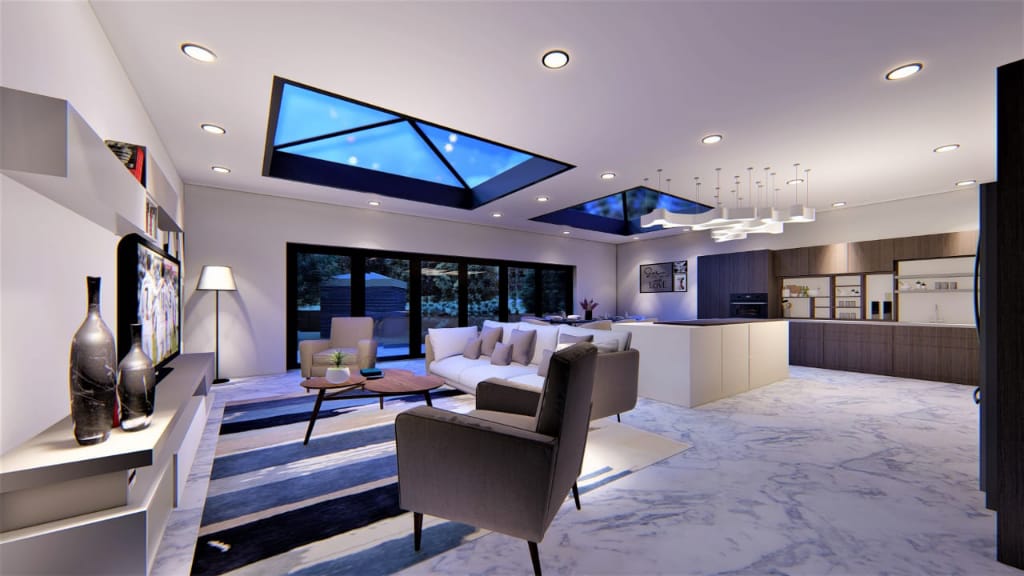
Open plan remains the most-requested layout change in residential projects, and rightly so. Connecting kitchen, dining, and living spaces allows light to travel further, makes smaller homes feel larger, and creates the connected family environment that most households actually want. But open plan done badly is one of the more common design regrets we encounter from homeowners who've had alterations done without architectural input.
The answer is to zone intelligently within the open space. Level changes, different floor materials, a kitchen island, or a low partition all create a sense of separation without walls. Full-width sliding or bi-fold doors allow the space to open to the garden in summer and feel more contained in winter. And it's worth an honest conversation about whether fully open plan suits your household. Families with young children or home workers often find that a partial opening, with a snug or glazed partition off the main space, works better in practice.
One thing that holds across every open plan project: the kitchen's position becomes critical in a way it wasn't when it was a separate room. Its relationship to natural light, to the dining area, and to the garden view defines how the whole space works.
The Practical Facilities That Make the Real Difference
There's a category of design decisions that generate little excitement during planning but deliver an outsized return once the project is complete. In the Greater Manchester housing market, these three are no longer optional extras — they're baseline expectations.
Utility Room
Moving the washing machine and dryer out of the kitchen changes how the kitchen feels and functions fundamentally. A utility room doesn't need to be large. Three square metres, properly planned, achieves everything that matters. What is important is position: connected to the kitchen, ideally with access to the rear or side of the house for muddy boots, wet dogs, and recycling. In most extension projects, a rear or side utility built as part of the kitchen remodel is one of the most consistently valued additions.
Downstairs WC
Its absence is one of the most common objections from buyers viewing Manchester family homes. For families with young children it's transformative; for resale value it's one of the most straightforward additions available. A space of 1.2m by 0.9m is sufficient. The key consideration is keeping it close to existing drainage runs, something to confirm at feasibility so the layout can accommodate it without compromising the wider design.
Ensuites
An ensuite to the principal bedroom is now standard in the market at a certain price point across Greater Manchester. In loft conversions where headroom is restricted, wet room configurations work particularly well, no shower tray or enclosure eating into a limited footprint. Where an ensuite is designed as part of a new extension bedroom from scratch, a rooflight above the shower is worth prioritising: natural light in a bathroom transforms what could be a functional box into something with genuine character.
All three are significantly cheaper to build in from the start than to retrofit later. Raise them at the briefing stage, not after the walls are plastered.
Natural Light and the Connection to Outside
Manchester averages around 1,400 sunshine hours per year, roughly 40% less than England's south-east. That's a design constraint, and good constraints produce good design. Rooflights and roof lanterns are among the most effective tools we use in extension projects: a well-positioned rooflight on a flat-roof rear extension can flood the kitchen with daylight at an angle that no wall window can match.
Beyond glazing, think about what the eye lands on when looking out. A clear sightline from the kitchen to a well-considered garden, a generous threshold between inside and outside, planting that complements the extension's materials, these details make the interior feel larger and more resolved. The garden doesn't need a landscape architect, but it does need to be part of the conversation.
Future-Proofing Your Home
Many future-proofing measures cost very little at build stage and a great deal later. A room designed with the right proportions and an adjacent WC can be a home office now, a teenage bedroom in five years, and a ground-floor guest room after that. Running conduit for EV charging during a project costs almost nothing; retrofitting the cable route afterwards is a disproportionate job. The same logic applies to heat pump readiness and smart home infrastructure.
In terms of the Manchester property market, buyers above a certain price bracket increasingly expect the downstairs WC, the ensuite, the open plan kitchen-diner, and off-road parking as standard. Getting these right during your project protects the home's value as well as improving how you live in it.
Final Thoughts
Good home design in Manchester isn't about following trends. It's about understanding how your household works, what your site allows, and which decisions made early will deliver the biggest difference to the finished home. The principles here, orientation, space planning, open plan zoning, practical facilities, light, and future-proofing, are a way of thinking before a project becomes a drawing.
At NADA Architects, we work with homeowners across Greater Manchester at every stage of this process. If you're in the early stages of planning a project, our free initial consultation is a good place to start.

More News