You have outgrown your home. Maybe the kids are sharing rooms, your kitchen feels cramped, or you just need a proper home office that is not a corner of the bedroom. The house ticks every other box: the location, the street, the neighbours. Moving is not the answer.
The question is: what is?
For most homeowners across South Manchester, in areas like Cheadle, Didsbury, Chorlton, and Heaton Moor, the decision usually comes down to two options: a loft conversion or a rear extension. Both add significant space. Both can genuinely transform how a home works. But they are very different projects, and the right choice depends on your property, your priorities, and how you actually want to use the space.
Here is an honest comparison.
What Each Option Actually Gives You
Before getting into costs and planning, it helps to understand what you are actually getting.
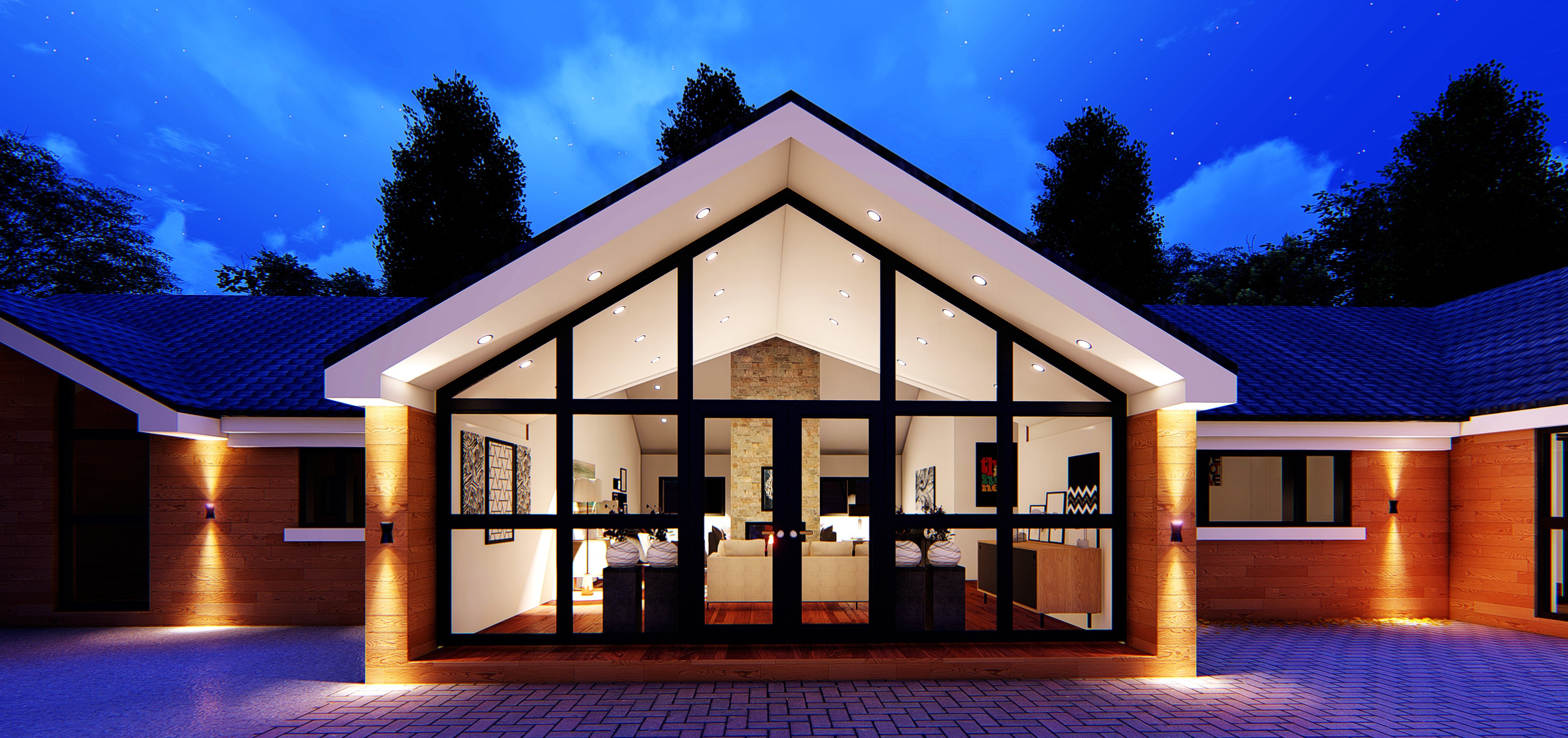
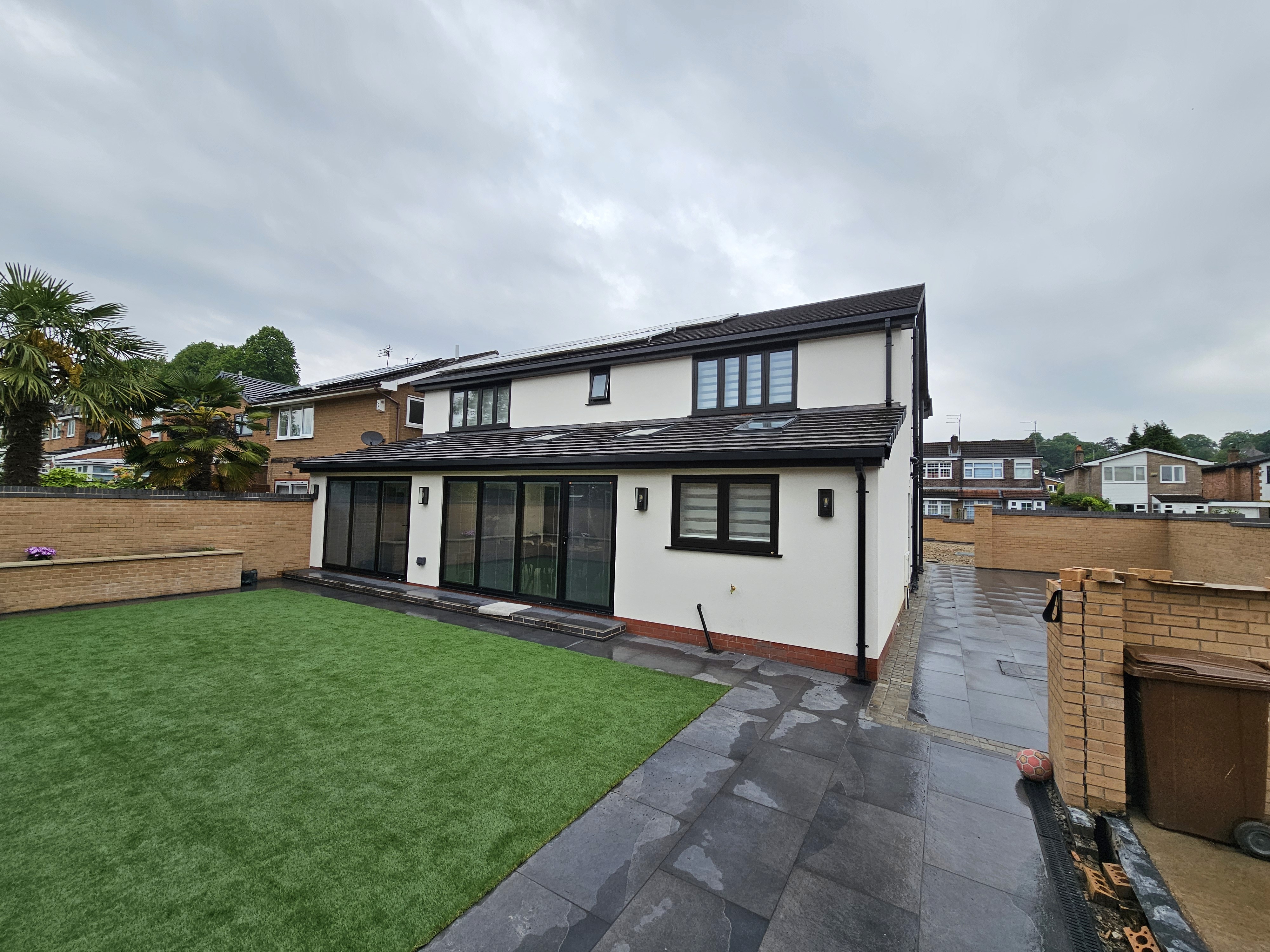
A rear extension adds floor space at ground level, typically by extending out from the back of the house. In most South Manchester semis and terraces, this means a larger kitchen, a kitchen-diner, or an open-plan living space. It is horizontal growth, and it directly connects to your existing ground-floor living areas.
A loft conversion adds floor space at the top of the house. It is vertical growth. The new room sits above everything else, which makes it ideal for bedrooms, bathrooms, and home offices. These are spaces that benefit from separation from the rest of the house.
Neither is automatically better. They solve different problems.
How Much Space Can You Gain?
Rear Extension
Under permitted development, most houses in England can extend up to 6 metres from the original rear wall for semis, or 8 metres for detached homes, without a full planning application. For a typical South Manchester semi, a single-storey rear extension of 4 to 6 metres deep and 5 to 6 metres wide could add 20 to 36 square metres of ground floor space.
A well-designed rear extension often feels like significantly more than that, because it opens up the connection between indoors and outdoors. With bifold or sliding doors, it changes the entire character of the ground floor.
A double-storey rear extension can add space on both floors, though this generally requires full planning permission.
Loft Conversion
Usable loft space depends on the pitch and head height of your roof. As a general rule, you need at least 2.2 metres from the floor joists to the ridge to make a conversion work comfortably.
Most loft conversions in Manchester, particularly in Victorian and Edwardian semis, yield around 20 to 40 square metres of floor space depending on the type of conversion. A dormer loft conversion adds a vertical extension to the roof slope, creating more usable floor area and headroom than a simple Velux conversion. You can see how we approached this in our Heaton Mersey remodel, where the loft became a flexible room that serves multiple functions.
Costs and Planning
What to Budget in 2026
These are realistic ranges for the Manchester market. Build costs vary by contractor, spec, and site conditions. Treat these as planning figures, not quotes.
Rear extension costs range from £50,000 to £80,000 for a single-storey 4m x 5m, up to £70,000 to £110,000 for a larger 6m x 5m footprint, and £90,000 to £150,000 or more for a double-storey. Architectural fees typically run from £2,000 to £4,000.
Loft conversion costs range from £25,000 to £40,000 for a Velux or rooflight conversion, £40,000 to £65,000 for a dormer, £45,000 to £70,000 for a hip-to-gable, and £55,000 to £80,000 or more for a mansard. Architectural fees are typically £2,000 to £3,500.
On a pure cost-per-square-metre basis, loft conversions tend to be cheaper than rear extensions. But cost is not the only consideration.
You can find out more about fees and our process on our extensions and loft conversions page.
What Planning Permission Do You Actually Need?
Many rear extensions fall within permitted development rights, meaning no full planning application is required. The key limits are a single-storey extension of no more than 6 metres from the original rear wall for semis or terraced homes, or 8 metres for detached, with a maximum height of 4 metres and materials that broadly match the existing house. Larger rear extensions may qualify under the Householder Prior Approval process. Double-storey extensions generally require full planning permission.
Many loft conversions also fall within permitted development, including dormers, provided the roof extension is no larger than 40 cubic metres for a semi or terraced house, or 50 cubic metres for detached. Hip-to-gable conversions require more careful assessment. Mansard loft conversions almost always require full planning permission.
Important for Manchester homeowners: if your home is in a conservation area, which applies to parts of Didsbury, Heaton Moor, Altrincham, and other areas across South Manchester, your permitted development rights may be restricted or removed entirely for both options. Our planning permission service covers the full process from initial feasibility through to submission and approval.
Disruption During the Build
A rear extension is a significant disruption, especially if it involves the kitchen. For 8 to 14 weeks, you may lose access to your kitchen and garden. Most families either stay elsewhere for part of the build or set up a temporary kitchen arrangement.
Loft conversions tend to be less disruptive. The main work happens above you rather than in the middle of your home. Most families stay in the house throughout, and the build programme is typically 6 to 12 weeks.
If minimising disruption matters to you, a loft conversion is usually the better option.
Which Property Types Suit Each Option?
In terraced houses across Chorlton, Withington, Fallowfield, and Burnage, rear extensions work well, as do rear dormers for lofts. Party wall considerations apply on both sides.
Semi-detached homes in Cheadle, Didsbury, Heaton Moor, and Bramhall suit both options well. Hip-to-gable loft conversions are particularly popular here, as seen in our Bramhall family remodel.
Detached homes in Wilmslow, Hale, Altrincham, and Alderley Edge offer the most flexibility on both fronts. Larger permitted development limits apply and both projects can add significant value.
Which Adds More Value?
A rear extension tends to have the most immediate impact on how the home feels day to day. A well-executed open-plan kitchen-diner is the single most transformative upgrade for a family home.
A loft conversion adds a bedroom, often with an en-suite, which directly increases the bedroom count. Going from 3 to 4 bedrooms in areas like Cheadle or Didsbury can add meaningful value to your property.
Both projects typically return 60 to 80 percent of their build cost in added property value, depending on area and execution.
A Simple Decision Framework
Five questions that help clarify the right choice for your home.
What does your home actually lack? If you need a bigger kitchen or family space, a rear extension is likely the answer. If you need a bedroom, home office, or bathroom, look at a loft conversion first.
What is your budget? Loft conversions are generally cheaper per square metre, so if budget is the primary constraint, a loft often delivers more for less.
How much disruption can you tolerate? If you need to stay in the house throughout the build, a loft conversion is usually more manageable.
What does your plot allow? A short back garden may make a loft the only realistic option. A low roof pitch or flat roof points toward a rear extension.
Are you in a conservation area? This changes the planning position significantly for both options. Get advice before assuming what is possible.
Can You Do Both?
Yes, and many homeowners do. A rear extension at ground floor level combined with a loft conversion is one of the most comprehensive ways to transform a family home. Done together, or phased with both in mind from the outset, they can be designed to complement each other. Our Gatley development is a good example of what that full-home approach looks like in practice.
We can help you think through a feasibility study that looks at the full potential of your plot.
Start the Conversation
The honest answer is that the right option depends on your home, your plot, and what you actually need the space for. There is no universal right answer.
At NADA Architects, we work with families across South Manchester and Cheshire who are in exactly this position. They know they need more space, and they just need someone to help them figure out the best way to get it.
If you are ready to explore what is possible, get in touch for a free consultation. No jargon, no obligation. Just an honest conversation about what your home could become.

More News