A kitchen extension is one of the most significant investments a Manchester homeowner can make. Get the materials right and the space will feel genuinely warm, comfortable, and connected to the rest of the home for decades. Get them wrong and no amount of clever design recovers it.
At NADA Architects, we have guided families across Didsbury, Chorlton, Cheadle, Bramhall, Gatley, and Wilmslow through exactly these decisions. This is what we have learned about choosing materials that work in Manchester's climate, suit the region's housing stock, and hold up to real family life.
Why Materials Matter
Manchester's climate puts real demands on a kitchen extension. Cold winters, high rainfall, and limited sunshine hours mean the materials you choose have to do more than just look good. They need to retain heat, manage moisture, and age gracefully through years of heavy use.
There is also a contextual challenge specific to South Manchester. The region's housing stock is dominated by Victorian and Edwardian terraces and semis, homes with strong character and established material palettes. A kitchen extension that clashes with the original build, in tone, texture, or proportion, rarely works well visually or adds the value it should.
The best kitchen extensions we have delivered share a common approach: they prioritise thermal comfort, use materials that age well rather than date quickly, and connect the new space to the existing home rather than sitting apart from it.
What Makes a Material Right for Manchester
The qualities we look for when specifying materials for a kitchen extension are thermal mass, the ability to absorb and slowly release heat, breathability in older properties where cement-based products can cause damp, durability under the kind of daily use a family kitchen sees, and compatibility with the existing home's character.
Natural materials, solid timber, stone, clay-based renders, and lime plasters, tend to perform well across all four. They are also the materials most likely to feel genuinely warm and inviting rather than clinical or interchangeable. As we covered in our eco-friendly renovation guide, the choice of sustainable, natural materials also supports better energy performance across the whole home.
Floors, Worktops and Cabinets
These are the three material decisions that define how a kitchen extension looks and feels day to day. Each one involves a trade-off between appearance, durability, maintenance, and cost.
Flooring
The floor in a kitchen extension has to handle spills, heavy traffic, and temperature fluctuations from bifold doors opening to the garden. Our most commonly specified options are the following.
Hardwood, particularly oak, is our most frequent recommendation for South Manchester extensions. It brings genuine warmth underfoot, ages beautifully, and connects naturally with the timber elements found in Victorian and Edwardian homes. In our Bramhall family remodel, hardwood flooring ran continuously from the existing ground floor into the new extension, making the addition feel like a natural part of the original home rather than something grafted on.
Natural stone, slate and limestone in particular, is ideal when paired with underfloor heating. Stone retains warmth effectively once it reaches temperature, and its durability makes it well suited to busy family kitchens. The visual weight of stone also grounds an open-plan space in a way that lighter materials cannot always achieve.
Porcelain tiles with a stone or wood finish offer the practical benefits of tile with a more natural aesthetic. They are easier to maintain than natural stone and more water-resistant than hardwood, which makes them a sensible choice for extensions with direct garden access.
In our Cheadle single-storey extension, hardwood flooring ran through from the kitchen into the orangery, reinforcing both the visual flow and the thermal continuity of the space.
Worktops
Worktops are the most heavily used surface in any kitchen. The options we most frequently specify at NADA Architects are as follows.
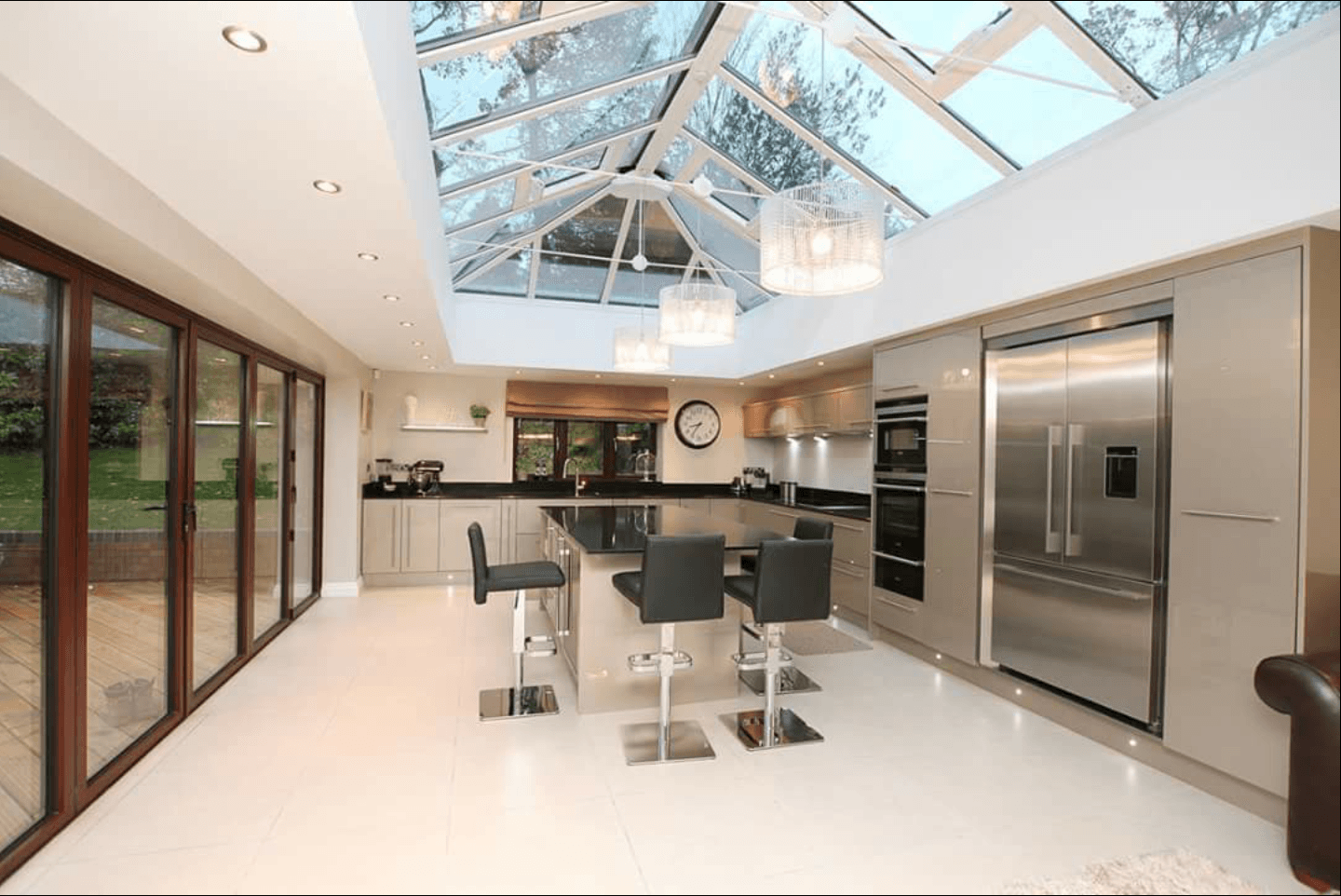
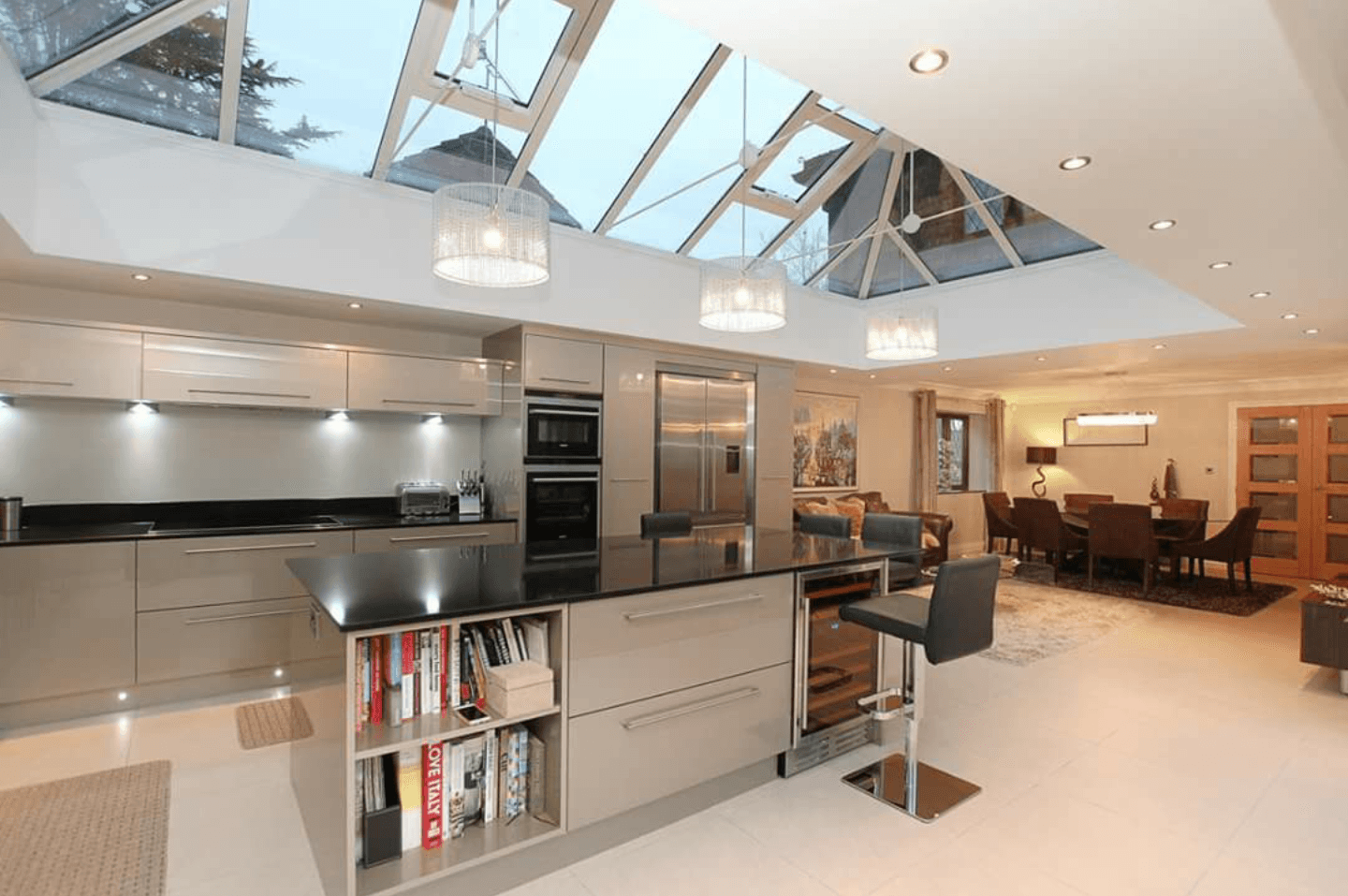
Granite is our most robust recommendation for families. It is bacteria resistant, highly durable, naturally warm to the touch, and no two slabs are identical, which gives it a character that engineered materials cannot replicate. In our Stockport full refurbishment, granite worktops anchored a kitchen that needed to balance a high-spec finish with genuinely practical family use.
Solid hardwood, typically walnut or oak in a butcher-block configuration, brings warmth and texture that stone cannot match. It requires regular oiling and is less forgiving of water damage than stone, but for families who want a kitchen that feels lived in rather than showroom-perfect, it is difficult to beat.
Quartz composite is the most practical choice for households with young children. Non-porous, stain resistant, and available in finishes that closely mimic natural stone, it is a sensible middle ground between the character of natural stone and the maintenance demands that come with it.
Cabinetry and Wall Finishes
Cabinet choice has an outsized effect on how warm or cold a kitchen feels. Painted timber doors in soft, earthy tones, warm whites, aged greens, and dusty blues, work well in South Manchester homes and age far better than high-gloss finishes. Reclaimed or solid oak cabinet fronts bring texture and depth that flat-panel alternatives rarely achieve.
In our Gatley development, oak cabinetry combined with stone flooring created a kitchen that felt genuinely warm without relying on decorative accessories to achieve it.
For wall finishes, limewash plaster is our recommendation for older properties. It is breathable, develops subtle colour variation as it cures, and has a depth that standard emulsion cannot replicate. In more contemporary extensions, an earthy emulsion in clay, warm grey, or terracotta tones works well and allows the cabinetry and flooring to lead.
Structural Materials and Glazing
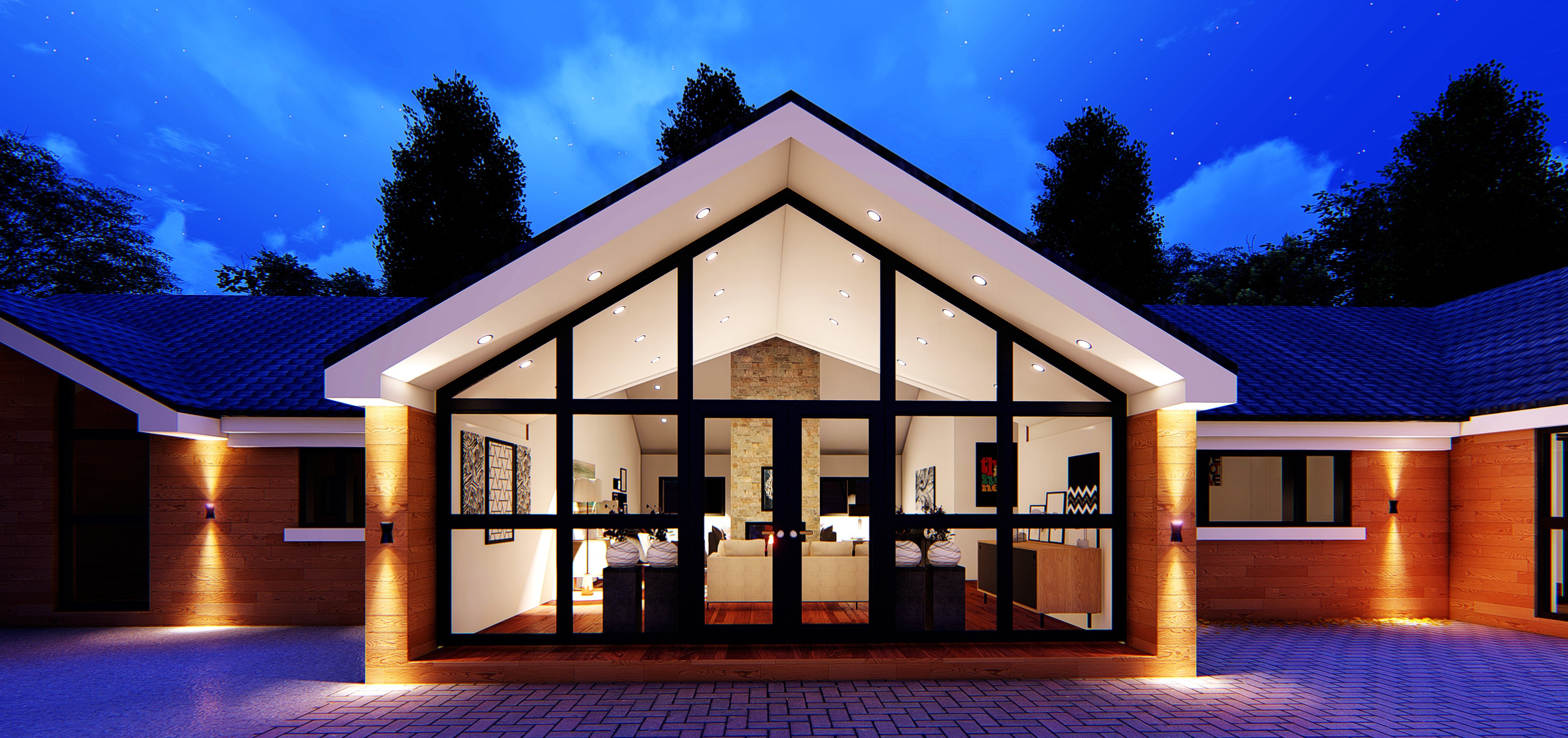
For the extension frame itself, we combine timber with brick and generous glazing wherever the orientation allows. Timber-framed structures with a brick base suit Manchester's conservation areas well and provide strong thermal performance. In our Heaton Mersey remodel, this approach met the local planning requirements while delivering a kitchen extension that felt light and connected to the garden.
Glass roof lanterns and large bifold or sliding doors are among the most effective tools for bringing natural light into a kitchen extension. Manchester averages around 1,400 sunshine hours per year, so every design decision around glazing matters. A well-positioned rooflight can transform a north-facing extension in a way that no wall window achieves.
Planning and Getting Started
Permissions and Local Considerations
Most single-storey rear kitchen extensions in South Manchester fall within permitted development rights and do not require a full planning application. The key conditions are a maximum depth of 6 metres from the original rear wall for semis and terraced homes, or 8 metres for detached properties, a maximum height of 4 metres, and materials that broadly match the existing house.
If your home is in a conservation area, which applies to parts of Didsbury, Heaton Moor, and Altrincham, your permitted development rights may be restricted or removed entirely. Material choices are also more likely to be subject to planning conditions in these areas, which makes early advice from an architect important. Our planning permission service covers the full process from feasibility through to submission and approval.
Building regulations will apply to any extension regardless of whether planning permission is needed. Insulation standards in particular have become significantly more demanding in recent years, and the material choices you make for the floor, walls, and roof need to be coordinated with the insulation strategy from the start. This is something we work through as part of every feasibility study we carry out.
Practical Advice Before You Start
A few things worth raising with your architect at the earliest possible stage.
Underfloor heating should be considered before the floor build-up is finalised, not after. It is significantly cheaper to install during construction than to retrofit, and it changes which floor materials are appropriate.
Material continuity between the extension and the existing ground floor makes a substantial difference to how cohesive the finished space feels. If you are keeping the original flooring in the rest of the house, make sure the extension material is chosen with that in mind.
If your home is older, get a structural survey before finalising the extension design. Victorian and Edwardian foundations vary considerably, and understanding what you are building from affects both the design and the material specification.
Start With a Free Consultation
Choosing materials for a kitchen extension involves more trade-offs than most homeowners expect, and the right answer depends heavily on your specific property, its orientation, the existing materials, and how you actually use your kitchen.
At NADA Architects, we work through these decisions with homeowners across South Manchester and Cheshire from the very beginning of a project. If you are in the early stages of planning a kitchen extension, get in touch for a free consultation. You can also explore our extensions and loft conversions service and our completed projects to see how we have approached material choices across a range of South Manchester homes.

More News